
Choosing focal therapy is not only about confirming that prostate cancer is present.
It is about confirming exactly where it is, how much is there, whether it is confined, and whether the rest of the prostate has been adequately mapped.
This is why some men need a second, confirmatory MRI-fusion biopsy before moving forward with HIFU or NanoKnife.
A previous biopsy may have diagnosed cancer, but treatment decisions should not rely on incomplete or low-resolution mapping, especially when the goal is to treat only the cancerous portion of the prostate while preserving the rest.
Why the First Biopsy May Not Be Enough
A prior biopsy may still leave important questions unanswered.
This is especially true when:
- The original biopsy was performed outside a focal therapy center
- The Biopsy was done before the MRI and now the MRi shows a suspicious area
- The location of the tumour is far away from the rectum, if it was a transrectal biopsy, which means that not all of the tumor was sampled or reached
- Pathology and MRI findings do not align ( discordance)
- The lesion location is unclear
- The Gleason score may be underestimated
- MRI shows more suspicious disease than the biopsy suggests
- There may be a need to sample the other side of the prostate
- If the Gleason score seems too low for the level of PSA
For focal treatment, these details directly affect whether a man is truly a candidate.
Why Confirmatory MRI-Fusion Biopsy Matters
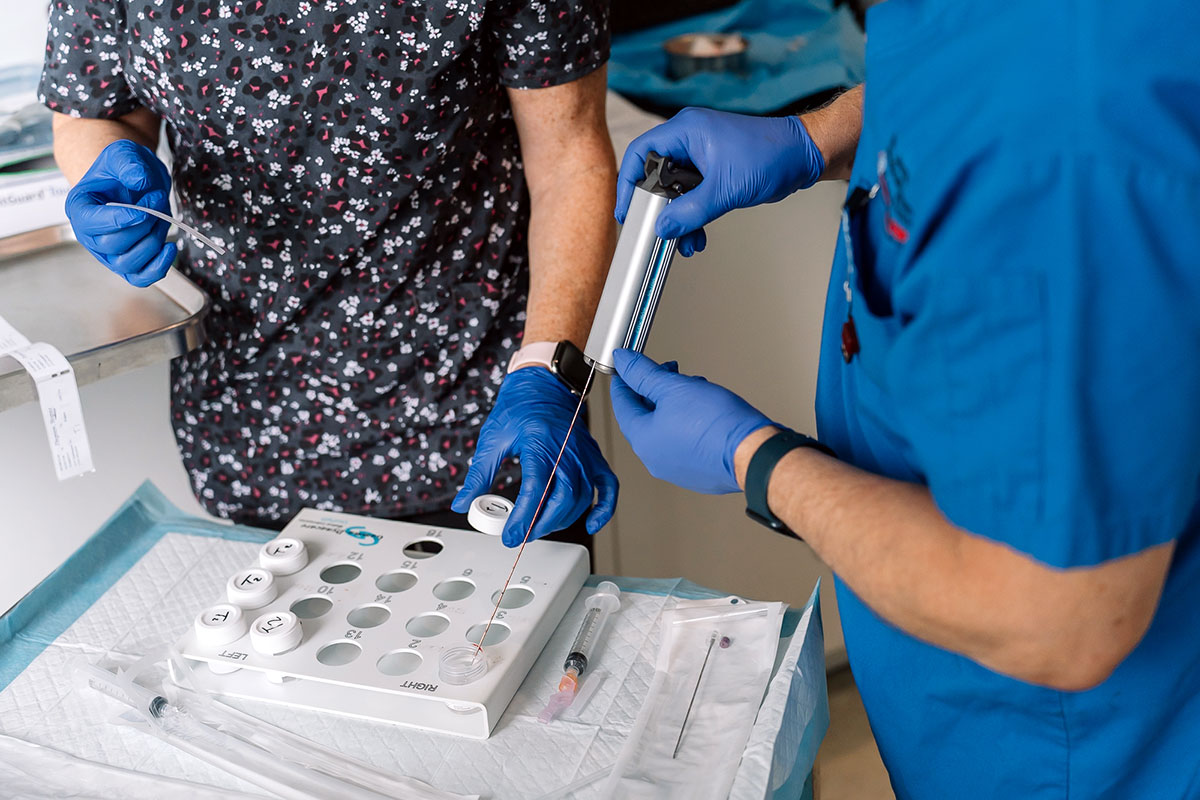
MRI-fusion biopsy combines suspicious MRI findings with real-time ultrasound targeting.
Rather than relying on random cores alone, it allows suspicious lesions to be sampled precisely while also assessing the rest of the prostate.
Need Prostate Cancer Diagnostics?
This is important because focal treatment depends on confidence in the full map:
- lesion size
- exact location
- laterality
- multifocality
- grade
- proximity to the urethra or neurovascular bundles
Without that level of detail, there is a higher risk of under-treating disease that extends beyond the intended focal zone.
When a Second Biopsy Changes the Treatment Plan
Sometimes the confirmatory biopsy simply validates the original diagnosis.
Other times, it changes everything.
A second biopsy may reveal:
- a higher Gleason score
- additional lesions
- bilateral disease
- cancer volume too large for focal treatment
- disease in a location better suited for HIFU vs NanoKnife
- findings that make surgery or radiation a smarter option
This is one of the most important reasons at UIC we emphasize precision before treatment.
The goal is not simply to offer focal therapy.
The goal is to offer it only when the cancer map justifies it.
Why This Protects Future Quality of Life
The better the mapping, the more confidently focal therapy can preserve:
- urinary control
- erectile function
- future retreatment options
- the possibility of avoiding whole-gland treatment
For one UIC patient who travelled from Calgary, precise MRI-defined lesion mapping later guided NanoKnife treatment. Five months later, PSA dropped from 15.5 to 1.8, MRI showed the lesions were gone, and urinary and sexual function were preserved.
This is exactly why treatment decisions should begin with the most complete map possible.
Dr Barkin got me in to have a MRI guided prostate biopsy in mere days. Meanwhile I have been waiting for months in BC and still no appointment scheduled anywhere. I found him and his staff very quick to respond, polite, professional, knowledgeable, and they did an excellent job with my biopsy. Thank you Dr Barkin
Wondering whether your first biopsy gives enough information for focal treatment?
A second MRI-fusion biopsy can help confirm candidacy and ensure the treatment plan matches the true extent of disease.
Book a consultation with Urology Innovations Canada to review whether your current findings support focal therapy.