
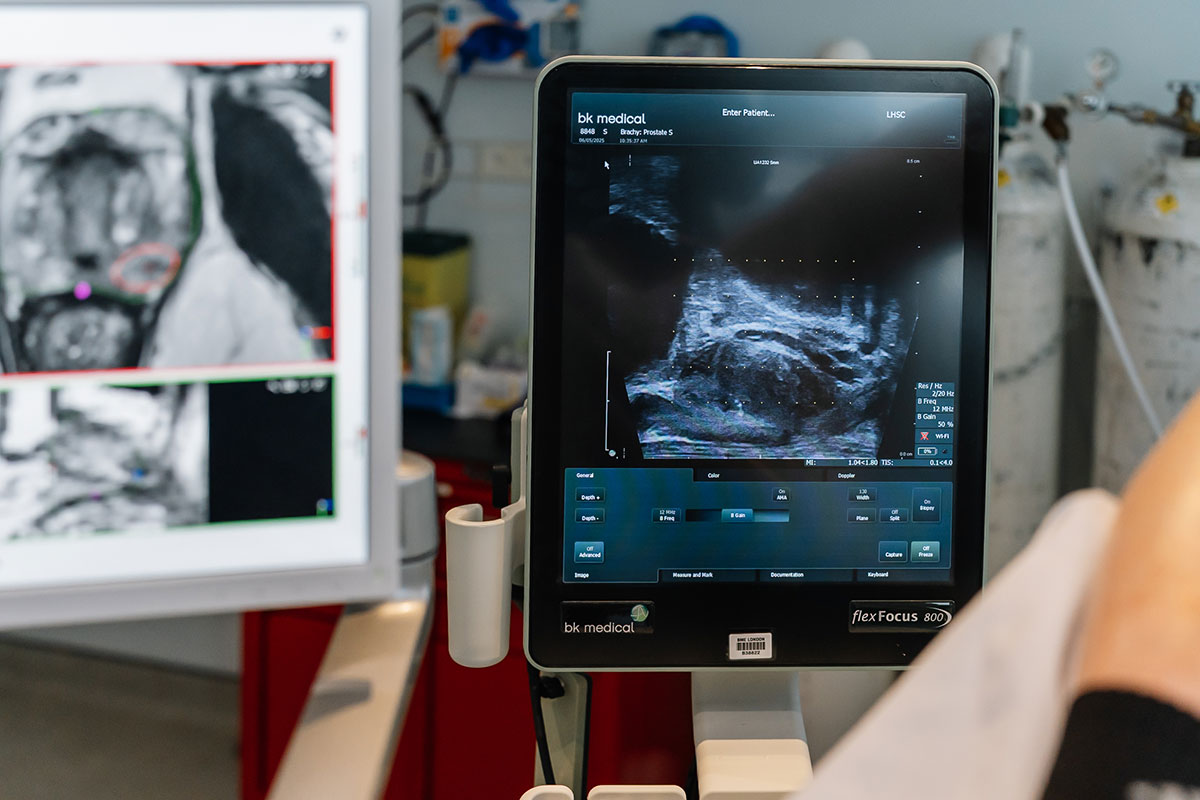
Most information about focal therapy focuses on who qualifies.
Just as important is understanding when it may not be the right choice.
Focal treatment – whether HIFU or NanoKnife – is designed for localized, well-defined prostate cancer. The goal is to treat only the cancerous portion of the prostate while preserving the surrounding tissue and function. That approach depends on one critical requirement: a high level of confidence in the cancer map.
If the disease cannot be clearly defined and safely targeted, focal therapy may not be appropriate.
When Focal Treatment May Not Be Appropriate
Focal therapy may not be recommended when prostate cancer is:
- Multifocal, affecting multiple areas across the prostate
- High-volume, extending beyond a single targetable region
- Associated with extracapsular extension, where cancer may have spread outside the prostate
- Diffuse or poorly defined on MRI, making precise targeting unreliable
- A high Gleason score of 8, 9 or 10
In these situations, treating only part of the prostate risks leaving clinically significant disease untreated and carries a high risk of cancer recurrence.
The Role of Prior Treatment and Anatomy
Previous treatments and individual anatomy also matter.
Men who have undergone prior radiation therapy may not be ideal candidates for certain focal treatments, as tissue response and healing characteristics can change.
In some cases, prostate size, shape, or location of surrounding structures may limit our ability to safely deliver energy to the intended area. For example, lesions located very close to the urethra or external sphincter may require a different approach to avoid side effects.
Add “active IBS/IBD”
Prostate Cancer Treatment Options
These are not disqualifications in isolation, but they are important factors in determining whether focal therapy can be performed safely and effectively.
Why Careful Selection Matters
Focal therapy is not about doing less treatment.
It is about doing precisely the right amount of treatment with adequate margin of safety (normal or benign prostate tissue) around the lesion.
That requires confidence that:
- the cancer is confined to a specific area
- the lesion has been accurately identified on MRI
- the rest of the prostate has been adequately assessed through biopsy
This is why we carefully review MRI imaging and, in many cases, we may need to perform a confirmatory MRI-fusion biopsy before proceeding.
Without this level of detail, there is a risk of under-treating disease that extends beyond the intended focal zone.
When Other Treatments May Be More Appropriate
In some cases, surgery or radiation may offer a more complete and appropriate treatment strategy.
This is particularly true when cancer is:
- difficult to localize
- discordant, with biopsy indicating different active cancer sites compared to the imaging target
- widespread within the prostate
- extended outside the prostate (extraprostatic extension or EPE) as proven by imaging, or
- shows signs of more aggressive behavior as indicated by the Gleason score
At Urology Innovations Canada, the goal is not to fit every patient into a focal pathway.
It is to recommend the approach that best reflects the true extent and behavior of the disease to maximize our chances for curing the cancer with minimum of treatment side effects.
Thank you again to the entire team at Urology Innovations Canada & for fitting me in so quickly. It was very much appreciated. I was so impressed with the technologically advanced procedures your clinic offers and the cumulative experience your team possesses. Your nursing staff were first rate. I couldn’t have asked for more. I just wish your advanced treatment options would rectify my cancer type. If they would, I’d back in your office as quickly as you could have me.
– J. B.
Why This Decision Requires Complete Information
Understanding when focal therapy is not appropriate is part of making a well-informed decision.
It ensures that treatment is based on accurate mapping, realistic expectations, and long-term outcomes – not preference alone.
Request a consultation with Urology Innovations Canada to review whether your MRI and biopsy findings support focal therapy.